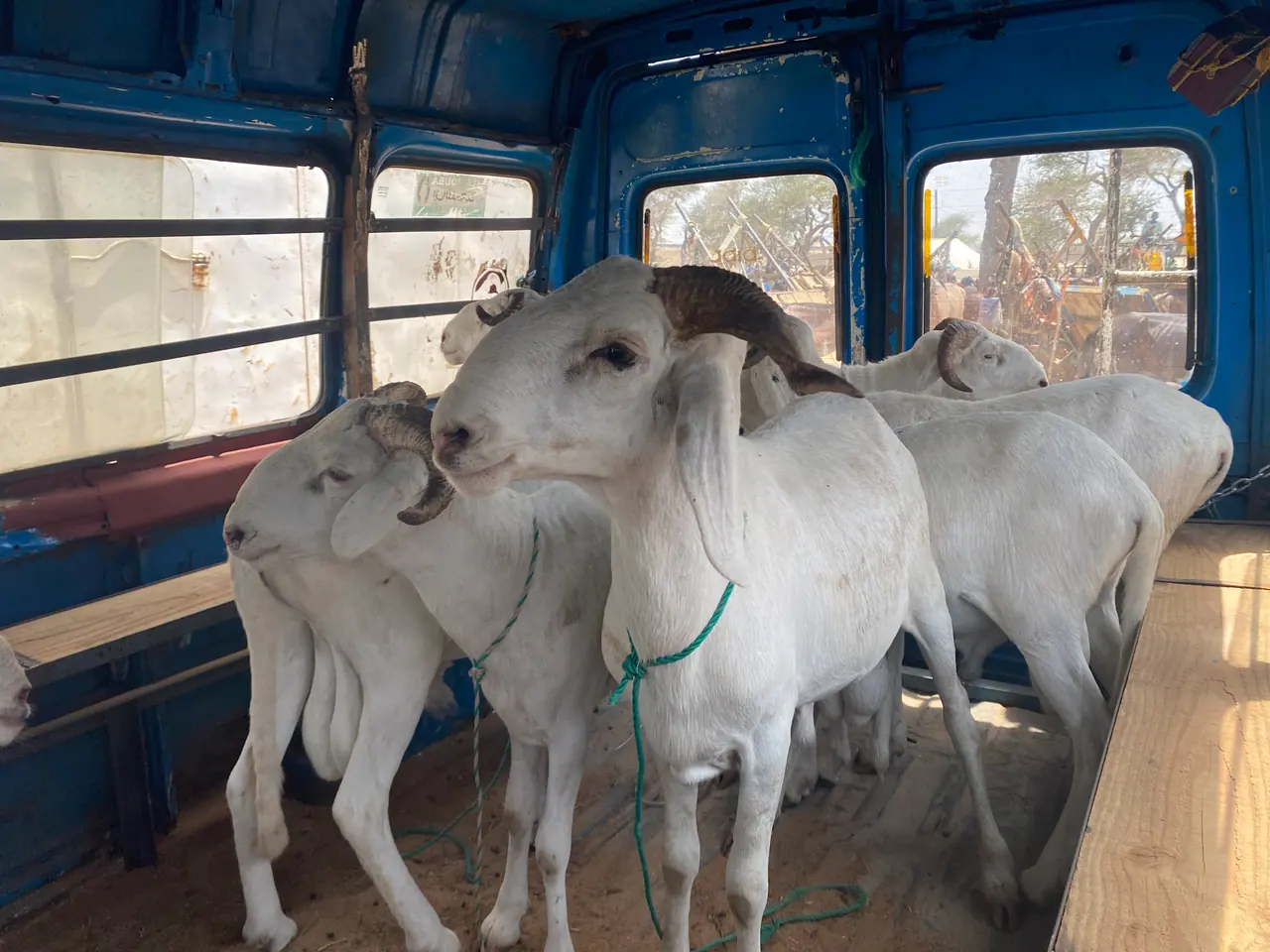
Two weeks ago, as of writing this, I went "sheep shopping" in Touba Toul.
It's a place located around 70 miles from the capital city Dakar, where many farmers gather once every other week to sell their livestock, primarily sheep.
Upon arrival, the view was quite impressive.
There were so many sheep that the landscape looked like a sea of wool.
You could find sheep of various breeds and sizes, providing a myriad of options for all types of buyers.
If you've ever been to Senegal or watched one of my previous YouTube videos, you'd know that bargaining is a common practice here.
We could both visit the same market, purchase the same item from the same seller, but end up paying completely different prices.
Often, the final price boils down to your bargaining skills.
Knowing this, I prepared myself in advance, summoned my inner negotiator, and mentally brainstormed some clever lines.
However, despite all the preparation, there was one thing I was absolutely unprepared for: not being able to understand the sellers.
Specifically, I had a hard time understanding the prices they quoted.
Can you imagine?
A native speaker who also happens to be passionate about his native language struggling to understand the very language he is teaching online.
What are the odds?
Yet, that’s exactly what happened.
Now, before you think:
“Well, it seems like it’s time to find another teacher, bye Ibrahima 👋🏽”
…give me 5 more minutes of your time !
I’m going to introduce you to the unique world of Wolof numbers.
Counting from 1 to 100
Just like most languages, Wolof uses unique words for numbers ranging from 1 to 5:
| Number | Wolof |
|---|---|
| 1 | benn |
| 2 | ñaar |
| 3 | ñett |
| 4 | ñent |
| 5 | juróom |
However, unlike most languages which have unique words for numbers from 6 to 9, Wolof does not.
Instead, it utilizes the numbers from 1 to 4, combined with 5, to express these values.
| Number | Wolof | Breakdown |
|---|---|---|
| 6 | juróom benn | (five one) |
| 7 | juróom ñaar | (five two) |
| 8 | juróom ñett | (five three) |
| 9 | juróom ñent | (five four) |
Finally, for the number 10, Wolof uses:
10 — fukk (ten)
From there, we add the numbers 1 to 9 to 10 using the preposition "ak" which means "and":
| Number | Wolof | Breakdown |
|---|---|---|
| 11 | fukk ak benn | (ten and one) |
| 12 | fukk ak ñaar | (ten and two) |
| 13 | fukk ak ñett | (ten and three) |
| 14 | fukk ak ñent | (ten and four) |
| 15 | fukk ak juróom | (ten and five) |
| 16 | fukk ak juróom benn | (ten and five one) |
| 17 | fukk ak juróom ñaar | (ten and five two) |
| 18 | fukk ak juróom ñett | (ten and five three) |
| 19 | fukk ak juróom ñent | (ten and five four) |
Then, to obtain multiples of 10, we simply place the numbers 2 to 9 before 10 (except for 30):
| Number | Wolof | Breakdown |
|---|---|---|
| 20 | ñaar fukk | (two ten) |
| 21 | ñaar fukk ak benn | (two ten and one) |
| 29 | ñaar fukk ak juróom ñent | (two ten and five four) |
| 30 | fanweer | (thirty) |
| 37 | fanweer ak juróom ñaar | (thirty and five two) |
| 40 | ñent fukk | (four ten) |
| 48 | ñent fukk ak juróom ñett | (four ten and five three) |
| 50 | juróom fukk | (five ten) |
| 80 | juróom ñett fukk | (five three ten) |
| 99 | juróom ñent fukk ak juróom ñent | (five four ten and five four) |
| 100 | téeméer |
At this point, you're likely thinking one of two things:
A: "Ibrahima, I still don't understand why you were struggling. It’s doesn’t seem that complicated 🤨"
or B: "I can now relate 🥲"
Either way we are just getting started 😆
Counting objects
What I've shared so far is how we typically count regular items, like objects.
We simply use the numbers I provided earlier, add "i" before the noun, and voilà:
Wolof
Am naa ñaari xar.
Wolof
Gis naa juróom ñenti jinax.
Counting money in Wolof
However, the method of counting money in Wolof is different.
Rather than stating the number that corresponds to the amount as in most languages, you indicate how many coins of 5 CFA (dërëm) are required to reach that amount.
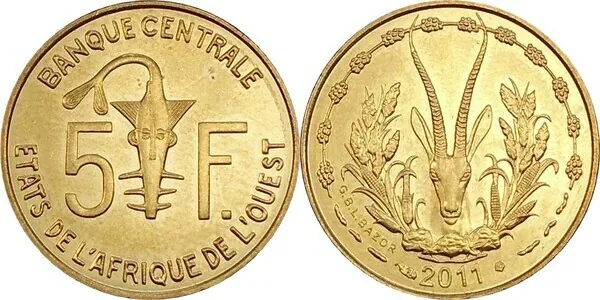
For example, instead of saying “juróomi téeméer” (five hundred), you'd say “téeméeri dërëm” (one hundred dërëm).
Here are a few more examples:
| Amount (CFA) | Wolof | In dërëm |
|---|---|---|
| 50 | fukki dërëm | (10 dërëm) |
| 150 | fanweeri dërëm | (30 dërëm) |
| 75 | fukk ak juróomi dërëm | (15 dërëm) |
Now, it's widely understood that money is counted in multiples of "dërëm" (5 CFA), so the "dërëm" part is often omitted from the sentence when discussing money.
Thus, when counting money, you typically state only the number of dërëm needed to reach the total amount.
This leads to the following:
| Amount (CFA) | Wolof | Meaning |
|---|---|---|
| 50 | fukk (10) | as in 10 coins of 5 CFA |
| 75 | fukk ak juróom (15) | as in 15 coins of 5 CFA |
| 150 | fanweer (30) | as in 30 coins of 5 CFA |
| 500 | téeméer (100) | as in 100 coins of 5 CFA |
Understanding prices at the market
This takes us back to our "sheep shopping" story.
What I hadn't realized before going to Touba Toul was that beyond a certain amount, money isn't counted in multiples of 5, but in multiples of 5,000.
In other words, when someone says "fanweer" (30), they actually mean 30 x 5,000 = 150,000.
Now imagine me just learning that and having to process
“juróom fukk ak ñett” = (5 x 10 and 3) x 5,000 = 265,000.
ON THE SPOT.
Add to that the fact that I also had to bargain with the seller at the same time, and you’ll understand why I struggled to keep up while I was there.
This made me realize that this system was probably invented by people who were good at mental math.
Thankfully, after hearing the same numbers again and again, my brain eventually started processing them quicker, which left room for my inner bargainer to do its job:
So, how much money is “fanweer ak ñaar”?
You have 10 seconds 😏